Instant Ramen Noodles
Packaged snack and quick-prep meal
A quick honest note
This breakdown is AI-generated general information based on a photo. It may contain errors, and all figures are estimates.
It is not medical, dietary, or treatment advice — for personal guidance, talk to a doctor, registered dietitian, or pharmacist.
It cannot determine allergen safety. Always verify ingredients on the actual product label and with the manufacturer.
Product names are trademarks of their respective owners. This analysis is independent opinion and is not affiliated with or endorsed by any brand.
The Quick Take
Instant ramen is a highly convenient and affordable pantry staple that provides quick energy, but is typically high in sodium and low in significant nutrients. For most people, it works best as an occasional snack or as a base for a more balanced meal when supplemented with protein and vegetables.
3/10 — occasional convenience food
Category
Packaged snack and quick-prep meal
Processing Level
Ultra-processed. The noodles are refined, flash-fried in oil, and packaged with a concentrated flavoring powder, classifying them as a food that has undergone significant industrial transformation.
Common Uses
Popular as a quick lunch, late-night snack for students, or used as a versatile base for 'ramen hacks' that incorporate leftovers.
Calories & Macros
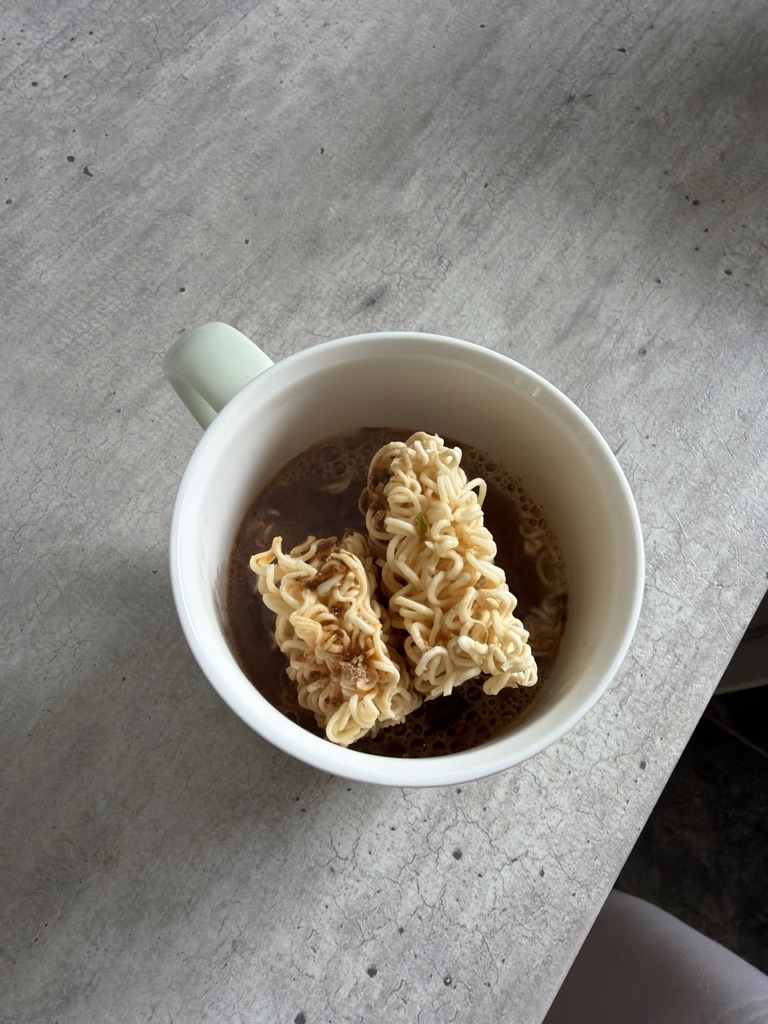
Approximate estimates for one standard package (approx. 85g) are 380 calories, 50g carbohydrates, 14g total fat, and 7g protein. The image shows a partial portion in a mug, likely totaling 150-200 calories depending on whether one or two 'blocks' were used.
Sugar, Salt & Fats
Depending on the brand, a single serving can contain 1,500mg to 1,800mg of sodium, which is 65-80% of the recommended daily limit. Most varieties contain roughly 7g of saturated fat (from palm oil) and negligible added sugars, usually under 2g.
Fiber, Protein & Micronutrients
Typically provides low fiber (1-2g) and moderate protein; it is often enriched with iron and some B vitamins (riboflavin, thiamine, folate) during the flour-bleaching process, but remains low in vitamins A, C, and D.
Ingredients Overview
Likely contains wheat flour, vegetable oil (often palm oil), salt, and a seasoning packet with salt, monosodium glutamate (MSG), and various flavorings. Always check the actual packaging for the definitive list.
Key Ingredients, Explained
Enriched wheat flour provides the main structure and energy; palm oil is used for deep-frying the noodles during manufacturing so they cook instantly; sodium provides flavor and preservation; monosodium glutamate (MSG) is a common flavor enhancer used to provide a savory umami taste.
Additives & Preservatives
Common additives include Tertiary Butylhydroquinone (TBHQ) as a preservative, sodium phosphates for texture control, and flavor enhancers like MSG or disodium guanylate.
Certifications & Claims
Labels may display 'No MSG Added' or 'Vegetarian Flavor', though the actual ingredients list should be consulted to verify these specific dietary preferences.
Label-Reading Tips
Check the sodium milligrams per serving and check the number of servings per container, as many bags that look like one portion actually contain two.
Points to Consider
The high sodium content is the primary factor to watch; many people also find the highly refined carbohydrates and lack of fiber can lead to hunger returning quickly.
Notable Strengths
Provides a quick, shelf-stable source of carbohydrates and calories; extremely affordable and accessible for many households.
Better Alternatives
Consider whole-grain noodles, brown rice vermicelli, or 'air-dried' (non-fried) ramen blocks paired with a low-sodium broth and fresh aromatics like ginger and garlic.
Serving & Usage Guidance
A standard serving is typically one package (about 3oz/85g). The density of noodles in the mug suggests a concentrated portion; being mindful of the sodium content by using half the seasoning packet is a common portion-awareness practice.
Ideas & Pairings
Turn ramen into a balanced meal by adding a soft-boiled egg or tofu for protein, along with steamed bok choy, frozen peas, or shredded carrots for fiber and vitamins.
Fitting It Into a Balanced Routine
Best enjoyed as a quick 'emergency' meal or occasional treat rather than a daily staple, ideally accompanied by diverse whole foods to round out the nutritional profile.
Environmental Notes
Individual plastic wrapping and non-recyclable flavor sachets contribute to plastic waste; palm oil sourcing is a common sustainability consideration for this product category.
Fun Facts
The first instant ramen, Chicken Ramen, was invented by Momofuku Ando in Japan in 1958 and was originally considered a luxury item because of its novelty.
The Bottom Line
Instant ramen is a classic convenience food that offers high-speed preparation and satisfaction but is heavily reliant on refined flour and high salt levels. It fits reasonably into a flexible lifestyle when balanced with other nutrient-dense foods. This is general educational information; consult a registered dietitian or physician for personal nutritional guidance.