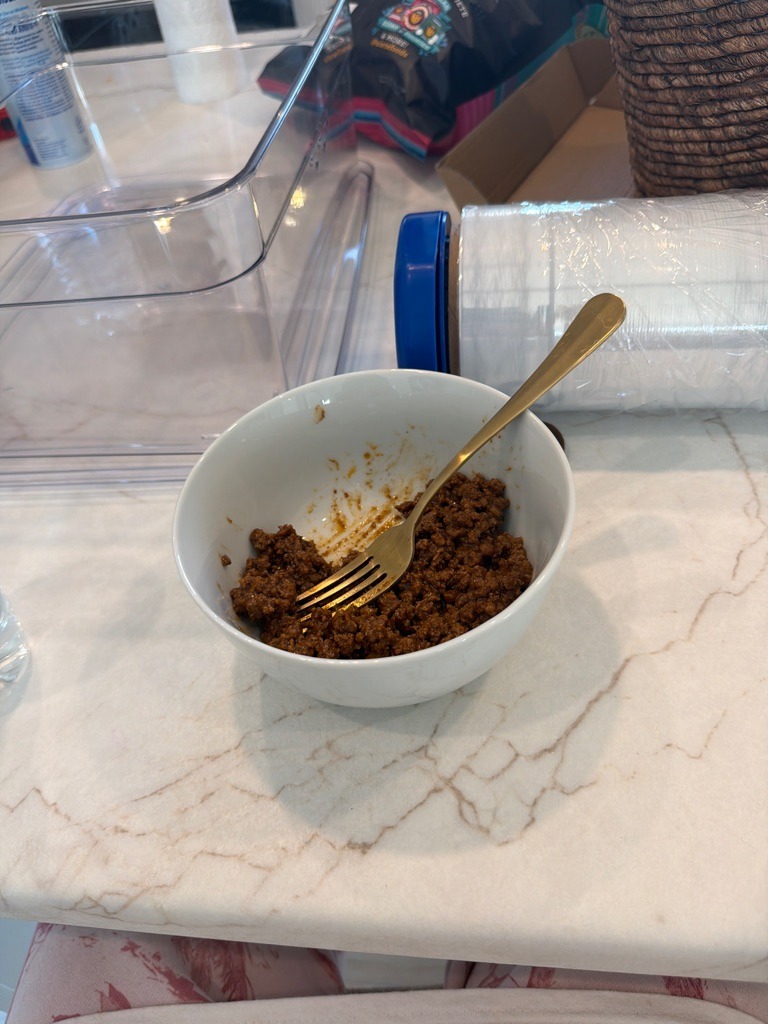
Seasoned ground meat or plant-based crumble
Prepared protein dish, typically used as a meal component, taco filling, or savory topping.
A quick honest note
This breakdown is AI-generated general information based on a photo. It may contain errors, and all figures are estimates.
It is not medical, dietary, or treatment advice — for personal guidance, talk to a doctor, registered dietitian, or pharmacist.
It cannot determine allergen safety. Always verify ingredients on the actual product label and with the manufacturer.
Product names are trademarks of their respective owners. This analysis is independent opinion and is not affiliated with or endorsed by any brand.
The Quick Take
This dish provides a hearty source of dietary protein and savory flavor, making it a versatile meal component. Depending on the meat cut or plant base used, it may contain notable levels of saturated fat and sodium, so balancing it with vegetables and whole grains is a popular approach. Individual dietary needs vary widely, making moderation and personal preference key guides.
6/10 — nutrient-dense protein source with variability based on preparation and fat content
Category
Prepared protein dish, typically used as a meal component, taco filling, or savory topping.
Processing Level
Moderately to heavily processed if prepared from pre-seasoned commercial kits or frozen crumbles, or minimally processed if cooked fresh at home from raw ingredients.
Common Uses
Frequently enjoyed inside tacos, burritos, stuffed bell peppers, pasta sauces, or savory grain bowls.
Calories & Macros
Estimated for a visible portion of roughly 3 to 4 ounces: approximately 200 to 300 calories, 15 to 25 grams of protein, 10 to 20 grams of fat, and minimal carbohydrates depending on added seasonings or thickeners. These figures are approximate estimates and vary significantly with recipe and portion size.
Sugar, Salt & Fats
Generally contains negligible sugar unless sweet sauces or tomatoes are added. Sodium content can vary widely based on pre-made seasoning packets or added salt. Fats depend heavily on the original protein source, ranging from lean poultry to higher-fat beef or plant oils.
Fiber, Protein & Micronutrients
Provides a high amount of complete dietary protein and notable micronutrients such as iron, zinc, and B vitamins if animal-based, or plant-derived minerals and fiber if plant-based. Does not typically contain significant dietary fiber unless beans or vegetables are mixed in.
Ingredients Overview
Likely contains ground protein (such as beef, turkey, chicken, or plant-based alternatives), cooking oils, and a blend of savory spices, salt, garlic powder, onion powder, and chili spices. The actual recipe or package label is the authoritative source.
Key Ingredients, Explained
Ground protein provides structural mass and amino acids. Cooking oils assist with browning and texture. Spices such as cumin, chili powder, and garlic contribute complex savory flavor without added sugar. Salt enhances overall palatability and preserves moisture.
Additives & Preservatives
If homemade, additives are minimal. Store-bought seasoned varieties or meal kits may contain anti-caking agents, yeast extract, or modified food starches to maintain texture and enhance savory flavor.
Certifications & Claims
Labels on packaged versions may feature claims like organic, grass-fed, or plant-based, which indicate specific farming or ingredient standards regulated by relevant agricultural authorities.
Label-Reading Tips
Check the nutrition facts panel for sodium and saturated fat content per serving, and review the ingredient list for hidden added sugars or preservatives.
Points to Consider
Potential for higher saturated fat and sodium levels depending on the specific ingredients and preparation methods used.
Notable Strengths
Offers a robust amount of protein and essential minerals, highly satisfying texture, and versatile adaptability across diverse global cuisines.
Better Alternatives
Leaner protein choices such as extra-lean ground turkey, chicken, or plant-based crumbles cooked with minimal oil and reduced-sodium spices.
Serving & Usage Guidance
A typical serving is generally around 3 to 4 ounces of cooked protein. Portion awareness is helpful regarding total sodium and fat intake, especially when paired with rich toppings.
Ideas & Pairings
Serve inside a whole-wheat tortilla with fresh salsa and lettuce, spoon over a bed of mixed greens and brown rice for a grain bowl, or use as a topping for baked sweet potatoes.
Fitting It Into a Balanced Routine
Can easily fit into a balanced routine as a satisfying protein anchor for lunches or dinners, best paired with fiber-rich vegetables, whole grains, and healthy fats.
Environmental Notes
Environmental impact varies considerably depending on whether the protein source is plant-based or livestock-derived, as well as packaging choices if pre-packaged.
Fun Facts
Ground and spiced meats have ancient roots across global culinary history, serving as an efficient way to tenderize tougher cuts of meat and evenly distribute intense flavors.
The Bottom Line
This item is a flavorful, protein-dense meal component that offers satisfying nourishment and culinary versatility. While fat and sodium levels depend heavily on preparation, it easily finds a balanced place in many diets. This is general educational information based on the photo, and a registered dietitian or physician is the right resource for personal guidance.